TalentOptima
TalentOptima
  • Home
  • About Us
  • Our Beliefs
  • Case Studies
  • Practitioner AI
  • What We Do
  • Blog
  • Contact
  • More
    • Home
    • About Us
    • Our Beliefs
    • Case Studies
    • Practitioner AI
    • What We Do
    • Blog
    • Contact
  • Sign In
  • Create Account

  • My Account
  • Signed in as:

  • filler@godaddy.com


  • My Account
  • Sign out


Signed in as:

filler@godaddy.com

  • Home
  • About Us
  • Our Beliefs
  • Case Studies
  • Practitioner AI
  • What We Do
  • Blog
  • Contact

Account

  • My Account
  • Sign out

  • Sign In
  • My Account

Complexity Is Real. Complication Is Optional.


By Andrew Kilshaw, Founding Partner | TalentOptima

“Simple can be harder than complex..."


You have to work hard to get your thinking clean to make it simple. 


But it’s worth it in the end because once you get there, you can move mountains.


-- Steve Jobs

You know the feeling.


You need to do something simple. Book a room. Get a supplier approved. Expense a train ticket. Change a line in a policy document. And somewhere between the first click and the final approval, you lose an hour. Maybe a day. Maybe a week. You're passed between systems that don't talk to each other, approval chains where nobody's sure who actually approves, and processes that were designed seven years ago by someone who left four years ago.


And at some point, sitting in your third meeting about why the first meeting didn't resolve the thing that could have been an email, you think: why has nobody ever just... fixed this?


You're not alone. Almost everyone around you is thinking the same thing. They just don't say it, because the complication feels so baked into the way things work that challenging it feels pointless. Or worse, it feels like challenging it would create more work than living with it.


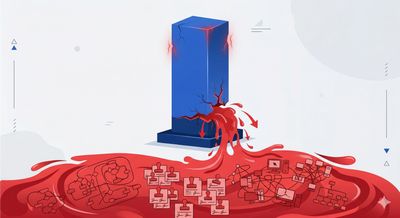
But here's what nobody tells you: most of what slows large organisations down isn't actually complexity. It's accumulated complication. And the difference between those two words matters enormously.


A heart transplant is complex. It requires deep expertise, precision, and can't be simplified without killing the patient. Filing an expense report that requires three approvals, two systems, and a PDF that won't render on mobile is not complex. It's complicated. Complication is what happens when processes, approvals, and ways of working pile up over years and nobody is given permission to remove them.

I've spent 25 years inside organisations that are genuinely complex - global pharmaceutical operations, Fortune 500 supply chains, matrix structures spanning dozens of countries. Complexity in those systems is real and often necessary. The problem is that necessary complexity attracts unnecessary complication like a magnet attracts iron filings. Layer upon layer of process, approval, duplication, and "the way we've always done it" - until the people doing the actual work spend more time navigating the organisation than serving the customer.


The cost is not trivial.

Two-thirds of 2,500 business leaders in McKinsey's global State of Organizations research say their organisations are "overly complex and inefficient." McKinsey's earlier work found that interaction workers spend 28% of the workweek managing email and nearly 20% searching for internal information or tracking down colleagues who can help. HBR research found that executives spend nearly 23 hours a week in meetings, up from less than 10 hours in the 1960s - a long-running management problem that's only getting worse.


Bain argues that the best-performing companies don't eliminate complexity altogether; they keep their organisations "as simple as possible," stripping out what they call "horizontal rain" - excess management layers, blurred accountability, and inefficient processes. Their research shows this can unlock sustainable cost reductions above 20%.


Meanwhile, Gallup finds that highly engaged teams are 23% more profitable. McKinsey estimates that disengagement and attrition can cost a median-size S&P 500 company $228 million to $355 million a year in lost productivity. A Freshworks survey of 700 professionals across IT, CX, finance, and operations reported that roughly 7% of annual revenue is lost to complexity, with 60% of employees saying they were at least somewhat likely to leave - with organisational complexity, complicated processes, and burnout as the primary drivers.


Complication isn't just an operating headache. It's a drag on speed, margin, and morale. But here's what most simplification programmes get wrong: they treat it as a cost-reduction exercise. Cut headcount. Consolidate systems. Restructure. Move on.


That misses the point entirely. The real prize isn't cost savings. It's releasing the organisational energy that complication has been holding hostage.

Volcano: A Case Study in Organisational Simplification

Volcano: What Happened When We Tried a Different Approach

I was asked by the CEO and Executive Committee at Sanofi to design and deliver what became "Volcano" - a 24-month simplification programme that touched 90,000+ employees across one of the world's largest pharmaceutical companies.


The context: Sanofi had been built through over 400 acquisitions across 50 years, and the post-merger integration was rarely perfect. Each acquisition brought products, markets, and capabilities. Each one also brought processes, systems, approval chains, and ways of working. Over time, these accumulated into layers of organisational scar tissue. The same task could often be done in multiple different ways depending on which legacy system, process, or team you happened to encounter. The complication wasn't just that processes were slow - it was that people couldn't even find the right way to do things. Multiple paths existed for the same activity, each inherited from a different acquisition, and nobody had rationalised them.


This wasn't the first attempt. A previous simplification programme had been anchored on cost-saving metrics. Cut headcount. Reduce spend. Show the savings on a dashboard. It didn't land. And the reason is instructive: when you frame simplification as cost reduction, employees hear "we're going to take things away from you." Resistance is rational.


We designed Volcano differently. The metric wasn't cost savings. It was employee experience. The question wasn't "how do we spend less?" It was "how do we remove the friction that stops people doing their best work?" That's not a cosmetic reframe. It changes everything about how you design the programme, who participates, and what success looks like. And it helped shift the culture from strict compliance — where everything required pre-approval - toward a trust-but-verify mindset, where capable people were empowered to act and checks happened after the fact.


McKinsey's 2025 redesign research supports this approach: their survey of 2,000 executives found that redesign success is most strongly associated with leader alignment, rewiring workflows, investment in people, and culture - not just restructuring boxes and lines. That's exactly what we built.


The CEO, Paul Hudson, set the tone from the start: simplification isn't a programme. It's a mindset. When people encounter needless complication, they should ask: why? And why can't we change this?

Finding the Problem First

I partnered with an awesome SVP of Finance who had a consulting background. Our brief was simple: figure out what the problem actually is and propose an approach.


So we started with the work, not with a framework. We ran surveys. We ran focus groups. We did "Days in the Life" observations across countries and functions. And we listened.


What came back was painfully specific.


One woman in Australia spent 10 days trying to get a supplier approved through the procurement system to come in and hang a picture in the office. In the end, she got her husband to do it. Ten days. For a picture hook. That's not complexity. That's complication masquerading as governance.


Someone else told us: "The problem is that we're following processes that are seven years old without questioning why we're doing them. The person who created the process left four years ago. So nobody even knows who owns it to give feedback."


These weren't outliers. The stories stacked up across every country, every function, every level. Smart, capable people spending their energy navigating the organisation instead of doing their jobs.

The Three-Level Framework

From the research, I designed a framework that treated simplification at three distinct levels. Think of it as a triangle.


Macro (the top of the triangle): The big, enterprise-wide problems that most people experience. Expenses policies. IT policies. Procurement thresholds. Travel approval chains. Things that are policy-driven, impact the whole organisation, and create friction with limited benefit. They're the organisational equivalent of potholes that every car hits but no single department is responsible for filling.


Mid (the middle): Team, function, or group-level challenges in how people work together. Is the strategy clear and coherent? Are people aligned on intent? Are roles clear? Are handoffs clean? Is there duplication of activity? These are the issues that make collaboration feel like wading through treacle, and they're different in every part of the business.


Micro (the base): The individual complexities that every single person carries. Diary management. Email overload. Meetings overload. Prioritisation. Communication effectiveness. Nobody talks about them as an organisational problem, but when 90,000 people are each losing time to personal complexity daily, the aggregate cost is enormous.

Three Workstreams, Three Levels

The Wallbreakers (Macro). A hand-picked team empowered directly by the CEO to find the big, gnarly, enterprise-level problems and work with their owners to either optimise or remove them. These were the problems that had persisted for years because they sat in the gaps between functions. The Wallbreakers had the authority to prioritise execution over perfect alignment. When something needed to change, they had air cover to make it happen.


The Simplification Sprints (Mid). We trained a community of Simplifiers across the company - people embedded in every function and country, trained in a methodology to help teams work through their complexity challenges. Think of it like the GE Workout approach: a structured sprint that diagnoses the biggest issues and delivers tangible simplifications within weeks, not months.


The Individual Toolkit (Micro). Every employee got access to an individual assessment of their biggest personal complexity challenges, plus curated hacks, guides, and tips. The real power was the social layer: for each type of complexity, employees shared what they were trying to solve and what actually worked. It became a living community of simplifiers at the individual level - people helping people, at scale, without waiting for permission.

What Should NOT Be Simplified

This is important, especially in a regulated industry like pharmaceuticals: simplification is not deregulation. It is not about weakening controls in high-risk areas. Drug manufacturing processes, clinical trial protocols, pharmacovigilance reporting - these are genuinely complex, and the consequence of failure is measured in patient safety, not inconvenience.


What simplification does target is low-value friction, duplication, ambiguity, and over-approval in areas where the risk profile doesn't justify the control. The question we asked repeatedly was: where would failure mean a patient is harmed, a regulator intervenes, or a law is broken? And where would failure mean someone booked a slightly more expensive hotel? Those are not the same risk profile, and they should not have the same approval process.


Moving from pre-approval to post-factum checks — wherever the risk profile allowed it - was one of the most culturally significant shifts Volcano delivered. It required the CEO personally endorsing the philosophy, and it required building the case country by country, process by process.

What Made It a Movement, Not a Programme

Volcano was deliberately designed as a movement, not a mandate. The difference is everything.

It started with pain, not with process maps. Solutions were grounded in real frustration, not theoretical inefficiency.


It was bottom-up and top-down simultaneously. Idea boxes, roadshows, and the Volcano Awards gave bottom-up energy. The Wallbreakers and CEO sponsorship gave top-down authority. The combination is what made it catch fire.


It focused on experience, not efficiency. When you optimise for efficiency, you tend to centralise and standardise. When you optimise for experience, you tend to remove friction and empower. Both can reduce costs, but only one builds a culture that sustains simplification after the programme ends.


It was deliberately time-limited. Capped at 24 months. Not because the work was done, but because the goal was cultural change, not permanent dependence on a central team. Sergei Zaiats, who led the day-to-day execution as Global Head of Transformation reporting to me, put it well: "Our greatest success is that simplification is now a mindset and a movement, not a mandate."

The Results

The original target was 24 simplifications in 24 months. The actual results:


  • 80+ company-wide macro simplifications delivered
  • 800+ country and function-level simplifications completed
  • 400+ proven simplifications catalogued for other teams to adopt
  • Over 12,000 individual simplification goals set by managers in annual objectives
  • Country ambassadors in 40+ countries
  • 430+ submissions to the annual Simplification Awards


But the numbers that mattered most were the outcomes people felt. Event contracts went from multi-page legal documents to two-page plain-language agreements. Event creation went from multi-step approval to a single click. Expense thresholds were raised so field teams stopped spending 30 minutes getting approval for a working lunch. Purchasing limits were raised so people could solve small problems without navigating procurement. Vacation requests became automatically approved.


We tracked employee sentiment through the annual engagement survey with a specific simplification question. The score rose consistently year on year - and the pattern was strong and consistent: gains were strongest in the countries and functions where we'd done direct roadshows and engagement. We ran roadshows in the top 13 countries, reaching nearly 20,000 employees directly. Post-roadshow surveys showed 97% found the materials valuable, 62% described themselves as "fired up" to take action.


By the time the centralised programme wound down, simplification had been embedded into the company's core behavioural framework, integrated into annual goal-setting, and supported by a permanent training offering. The programme ended. The mindset didn't.

How Other Companies Are Tackling It

Sanofi wasn't operating in isolation. Simplification has become a boardroom priority across industries, and the strongest examples share common patterns with what we built.


DBS Bank reorganised around 33 platforms, scaled 60+ customer journeys, and cut end-to-end AI deployment time from 18 months to less than 5 months. That's simplification as architecture plus accountability, not just cost cutting.


GSK reported in its 2024 annual report that AI-driven automation of clinical and regulatory submissions helped reduce median submission time by 24% versus the prior year, alongside 54 digital twin models across 12 products.


The Weather Company moved from 13 maxed-out data centres to a CMS running on 10 AWS-hosted servers, reducing the share of tech effort spent on maintenance from 60-70% down to 20-25% - freeing a 450-person engineering team for strategic work.


A BCG grocery client reduced 20-25% of SKUs across 30 categories and saw sales in those categories increase by 2% - a direct rebuttal to the fear that simplification automatically destroys revenue.


A Bain beverage producer cut total SKUs by 10%, tail SKUs by nearly half, grew revenue per SKU by 16%, and reduced complexity costs by 45%.


Bain's broader Complexity Reduction framework identifies five domains - strategy, organisation, products, processes, and technology - and argues that simplification in any one creates opportunities in the others. Their research includes examples of companies cutting support-function layers by 25% and reducing committee governance time by more than 50%.

What I Learned

Volcano wasn't my first simplification rodeo. I've spent 25 years navigating complexity at different scales and in different cultures.


At Nike, complexity was real but relationships made it work. Nike had a genuinely complex global matrix - fast-moving consumer market, powerful brand functions, multiple geographies with very different cultures. But Nike people found ways through it. Not through elegant process design, but through relationships. People knew who to call, who could actually make a decision versus who needed to be consulted. The informal network was the real operating model. That works brilliantly at a certain scale and culture. It breaks down when the organisation gets too large, too dispersed, or too regulated for relationship-based workarounds to carry the load.


At Shell, simplification meant rewiring the organisation, not just the processes. I led the complete transformation of Shell's global Downstream business - $300B+ revenue, 34,000 employees, delivering over $1B in additional EBIT. A big part of the value wasn't removing process. It was redesigning the organisation itself - shifting from a functional axis to market segments (aviation, marine, construction) so that decisions could be made closer to the customer. We also had to execute this during COVID-19, which taught us a lot about what's truly essential when everything non-essential becomes impossible.


At Sanofi, simplification required thoughtful risk-taking in a regulated environment. This is what most transformation leaders get wrong in industries like pharmaceuticals. Decades of regulation cause the compliance mindset to bleed into everything. Controls designed for safety-critical processes get copy-pasted onto non-critical activities. The organisation stops distinguishing between "we must control this because the consequence of failure is catastrophic" and "we've always controlled this because nobody ever asked whether we still should."


Simplification in a regulated environment means drawing a clear line: where is the risk genuine, and where is it inherited habit?

Principles That Hold Across All Three

Complicated is not complex. Complex systems need to be managed. Complicated systems need to be simplified. Cutting the wrong one is dangerous. Leaving the wrong one intact is expensive.


Simplification is a superpower, not a cost play. The organisations that treat it as a strategic capability - not a one-off programme - consistently outperform. It's not about doing less. It's about removing the friction that prevents people from doing their best work.


Work all three levels simultaneously. Macro without micro means you've fixed policies but people's days are still chaotic. Micro without macro means individuals are more effective but still hitting organisational walls. The triangle only works when all three levels are active at once.


My operating heuristic: the 1/3 - 1/3 - 1/3 rule. In my experience of large transformations, roughly a third of the population is relieved you're doing it ("Thank God you're here"), a third is on the fence, and a third is actively resistant. Design for the middle third. Win them over with early, visible, tangible wins.


Be ruthless on execution. The graveyard of corporate change is full of beautifully designed programmes that died in implementation. Volcano worked because it had dedicated project managers seeing things through, wallbreakers with CEO-level authority to unblock, and a relentless focus on delivery over debate.


Time-limit the programme. Make the mindset permanent. If the simplification effort can't survive without a central team, it hasn't changed the culture. It's just added another layer of complication.

The Bigger Picture

We're living in an era where every organisation is being asked to do more with less, move faster, adapt to AI, navigate geopolitical uncertainty, and somehow keep their best people from burning out. The organisations that will thrive aren't the ones that add more programmes, more tools, more layers, and more meetings. They're the ones that systematically remove the friction that prevents talented people from doing what they were hired to do.


Complexity is real. Complication is optional. And simplification - done properly - is the prerequisite for everything else.


If your organisation is struggling with accumulated complication that's slowing decisions, burning out employees, and hiding the real cost of "the way we've always done it" - I can help.


I've hired the Big Four, managed the Big Four, and learned from the Big Four. I know what they're brilliant at and where their model breaks down. What I offer is the same calibre of strategic thinking - grounded in 25 years of actually doing the work at Nike, Shell, and Sanofi, not just advising on it - at a fraction of the cost.

Let's chat about simplification

about the author

Andrew Kilshaw

Founding Partner, TalentOptima

As Founding Partner at TalentOptima, Andrew brings 25+ years of proven experience elevating organizational capability and accelerating and delivering transformation, with highly evidenced results. 


He is known for his collaborative approach to developing innovative, disruptive and data-informed strategies, and driving systemic and engaging human-centred change. Equal parts of curious, think and do.


He found his passion for helping organizations and employee realize their potential while studying his MBA at IMD in Switzerland. He stayed on, working with faculty, to help Fortune 500 companies learn their way to the greatness needed for each to be successful and thrive. Since then, he has spent over two decades helping raise the game of some of the world's most recognised brands, often leaders in their respective industries - Nike, BlackRock, Shell and Sanofi. 

Experience Driving Organizational Health

Andrew brings significant experience in helping complex global organizations be more efficient and effective.

Explore examples of his experience

Copyright © 2026 TalentOptima Ltd - All Rights Reserved.

Registered as a Limited Company (#15923883) in England & Wales

  • Contact
  • Terms & Conditions